Functional Skills Across the Spectrum
Built from more than 20 years of clinical and educational work, Cristina Busu’s curriculum brings structure to the space between introducing a skill and seeing the learner use it with less support.
Identify the foundations and prerequisites that need to be in place first.
Follow clear procedures, prompting strategies, and defined response goals.
Increase the demand gradually instead of treating one correct response as the finish line.
Use support intentionally, then fade it as the learner becomes more independent.
Learning Changes As The Response Changes
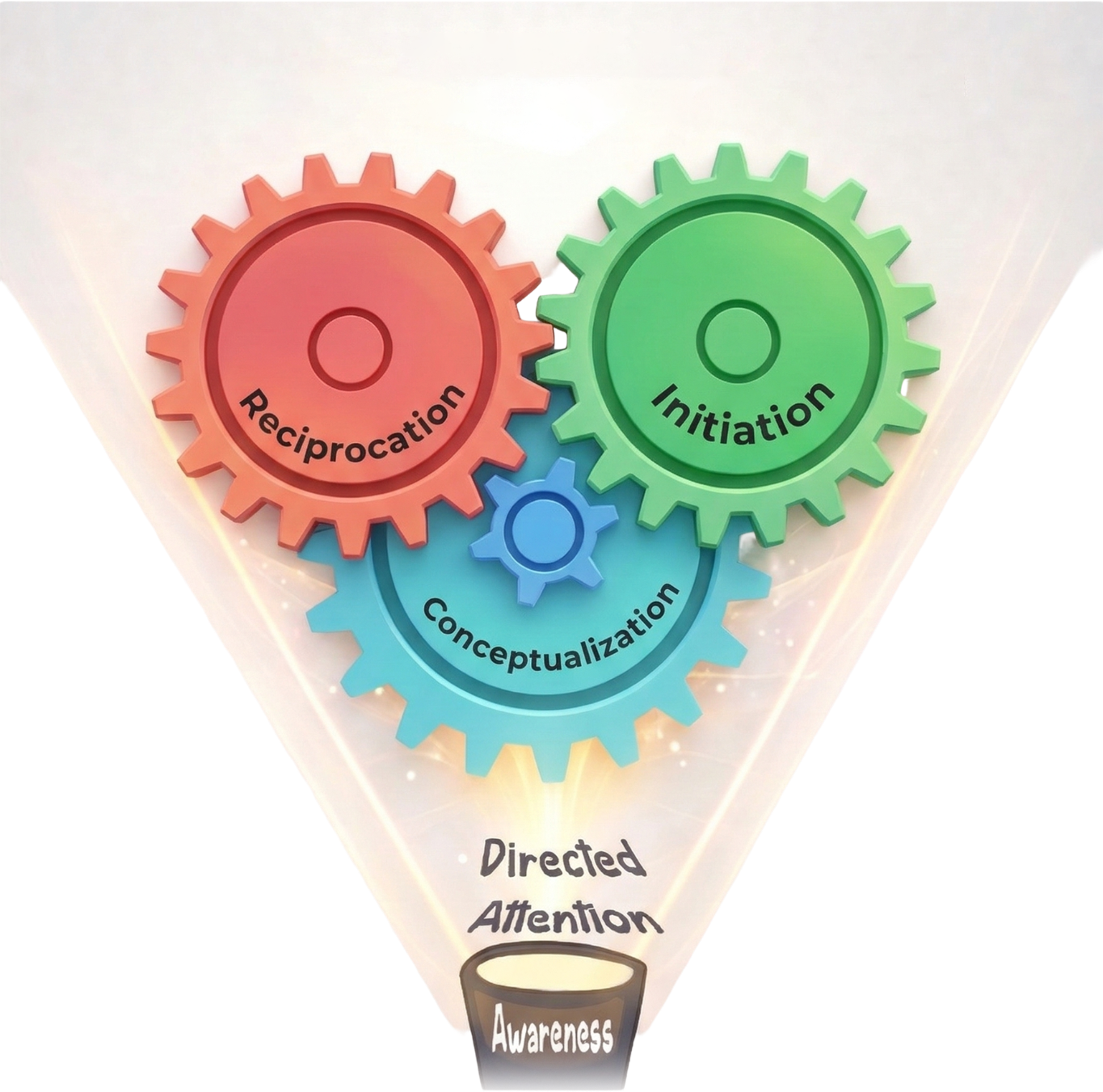
The curriculum looks at more than whether a learner can perform a skill. It follows how that skill is understood, used with another person, and eventually initiated without someone else starting the moment.
CONCEPTUALIZATION
Build The Meaning Behind The Skill
Conceptualization brings together imitation, receptive and expressive learning, and cognitive connections so the learner can understand what a skill means—not simply reproduce a response.
RECIPROCATION
Respond With Something Of Your Own
Reciprocation changes the demand. Instead of matching another person’s behavior, the learner responds to their cues and contributes something different to the back-and-forth interaction.
INITIATION
Begin Before Anyone Asks
Initiation is learner-led. The learner notices the situation, identifies an opportunity, and starts an action, task, or communication without another person first prompting the response.
From guided learning to greater independence.
The curriculum progresses logically from observing and copying to responding and sharing, and ultimately to leading and proposing.